
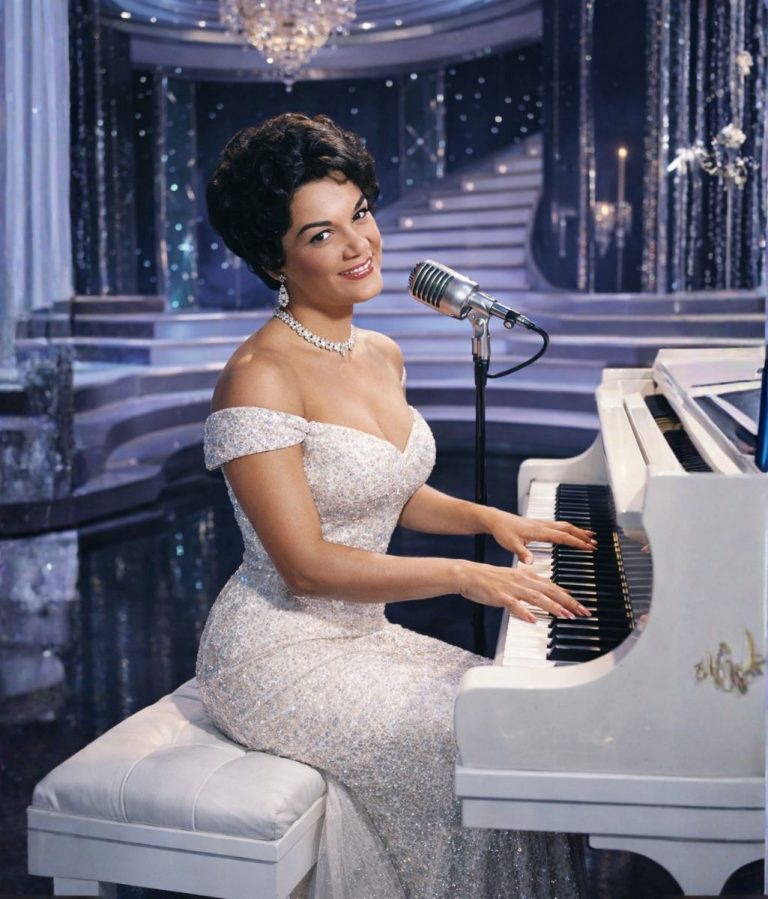
 Eight years ago on this very day, the lights dimmed on a stage that had witnessed decades of unforgettable music. The audience sat quietly, sensing that something rare was unfolding before them. It was not simply another concert. It was the final performance of Connie Francis, a woman whose voice had carried across generations and whose songs had become part of the emotional fabric of millions of lives.
For many in the crowd that evening, the moment felt both celebratory and deeply reflective. They were not only listening to a beloved singer perform — they were witnessing the closing chapter of a career that had shaped popular music for more than half a century.
Connie Francis had long been known as one of the most recognizable voices in American music. Her ability to deliver a song with clarity, emotion, and unmistakable sincerity allowed her recordings to travel far beyond the era in which they were first released. Her music became the soundtrack of countless memories — first dances, quiet evenings, long drives, and moments of reflection shared by families across decades.
But on that final night eight years ago, the atmosphere inside the venue carried a unique stillness.
The audience knew they were hearing something that would not come again.
When Connie stepped onto the stage, the applause rose immediately — not the polite applause of routine concerts, but the kind reserved for someone whose voice has shaped lives. She acknowledged the crowd with a warm smile, the same gracious presence that had defined her public image throughout her career.
Time had changed many things, yet the essence of her voice remained unmistakable.
Over the years, Connie Francis had recorded songs that traveled around the world. Her recordings reached listeners far beyond the borders of the United States, becoming beloved in countries where audiences embraced her emotional storytelling. Her voice carried both strength and v, a combination that allowed her to connect with people from vastly different backgrounds.
During that final performance, each song seemed to carry an extra layer of meaning.
Listeners were not simply hearing familiar melodies. They were revisiting moments from their own past. A single lyric could summon memories of youth, family gatherings, or long-forgotten seasons of life. That power — the ability to awaken personal memories in strangers — is one of the rare gifts possessed by truly influential artists.
As the concert continued, the audience remained deeply attentive. Some quietly wiped tears. Others held their hands together in appreciation, aware that they were witnessing a moment that would soon become part of music history.
What made the evening especially meaningful was Connie's humility.
Despite decades of success, she never presented herself as someone standing above her audience. Instead, she spoke warmly to the crowd between songs, expressing gratitude for the loyalty and support that had carried her through so many years of performing.
For Connie Francis, music had always been more than a profession. It was a lifelong conversation between singer and listener.
That night, the conversation was drawing gently to a close.
When she reached the final number of the evening, the room seemed to grow even quieter. Every note carried the awareness that this would be the last time fans would hear her perform live on stage. The performance was not rushed, nor was it overly dramatic. Instead, it felt graceful — like the final page of a cherished story being turned with care.
When the last note faded, the crowd rose to its feet.
The standing ovation continued for several minutes, filling the room with a mixture of gratitude and respect. It was not simply applause for a single performance. It was a recognition of a lifetime devoted to music.
Connie Francis stood there for a moment, absorbing the response, before offering a gentle wave of thanks.
For those who were present, the memory of that night remains vivid. They recall the atmosphere, the warmth of her voice, and the shared understanding that an extraordinary chapter in music history had reached its conclusion.
Today, eight years later, that final performance continues to resonate.
Not because it marked an ending alone, but because it reminded listeners of the enduring power of music to connect people across time. Connie Francis may have stepped away from the stage, but the songs she gave to the world continue to live on — played in homes, remembered by generations, and rediscovered by new audiences.
And in that way, the legacy of Connie Francis did not end when the curtain closed eight years ago.
It simply moved from the stage into the lasting memory of those who still listen — and still feel the emotion carried in every note she ever sang.