
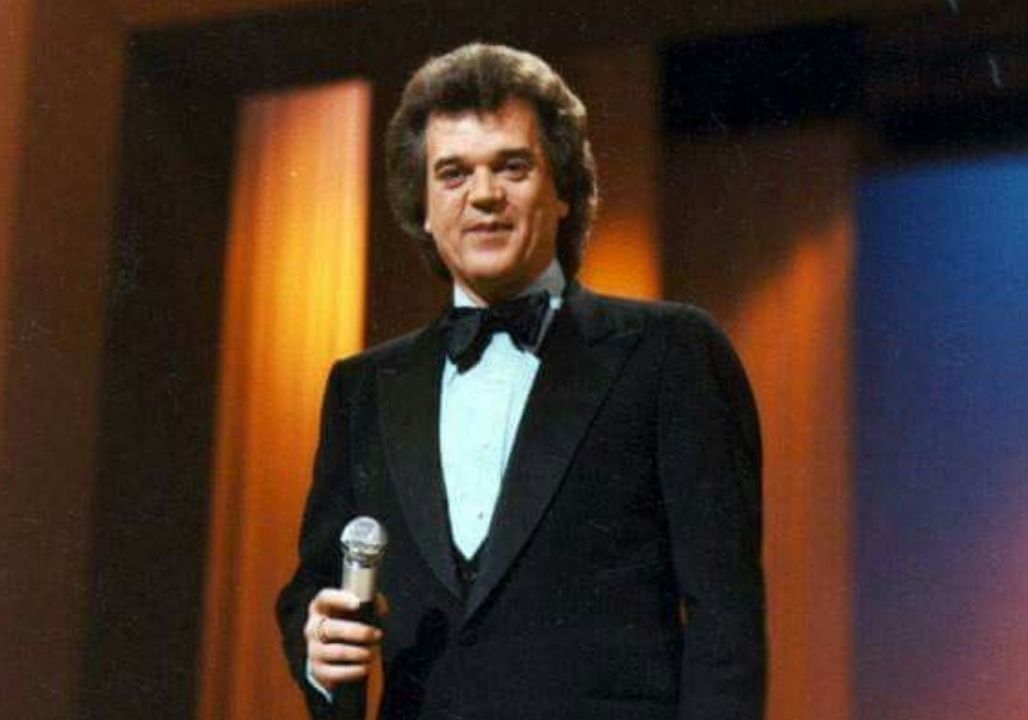

Introduction:
Thirty-three years after Conway Twitty made a quiet yet resolute decision that a certain song would never again be performed in public, the melody he had set aside returned in the most unexpected and solemn setting imaginable—not on a stage, not over the radio, but at his funeral. There, before 7,120 mourners standing in reverent silence, music transformed grief into something deeper: reflection, gratitude, and quiet understanding.
Throughout his life, Conway Twitty was known not only for his unmistakable voice, but also for his careful stewardship of his artistic legacy. He understood the weight of sound—its emotional power and its permanence. When he chose to withdraw a particular song from his repertoire, he did so without spectacle or explanation. For him, music carried responsibility. If a song no longer aligned with his values or the man he had grown to be, it no longer belonged to his voice. And for more than three decades, that conviction remained unbroken.
Until the day he was laid to rest.
As family, friends, fellow musicians, and devoted fans gathered to honor him, the service unfolded with dignity and restraint. Words were spoken with care, memories shared with warmth, and grief moved through the room in a quiet, almost sacred stillness.
Then, without announcement, the music began.

At first, the melody emerged softly—tentative, almost hesitant—as though aware of its own history. Within moments, recognition rippled through the room. Heads bowed. Eyes closed. Hands reached instinctively for one another. No one spoke. No one moved.
For those who knew the story, the moment felt almost unimaginable. This was the very song Conway Twitty had once vowed would never be heard again. And yet, here it was—not in defiance of his wishes, but in a spirit that seemed to honor them in a deeper way.
The effect was immediate and profound. Tears flowed freely—not from shock, but from release. The song did not reopen wounds; it seemed to heal them. What had once carried tension now became a vessel for remembrance. Its meaning had shifted—not because the notes had changed, but because time had transformed how they were understood.
Those present later described the atmosphere as sacred. Not dramatic. Not theatrical. Simply sacred. The music did not overwhelm the room; it settled into it—carrying grief, gratitude, and memory together in a single, shared experience. It felt as though the melody had waited all those years for the one moment when it could finally belong.

For many, the choice to include the song did not contradict Conway Twitty's wishes—it completed them. In life, he had chosen silence. In death, that silence gave way to understanding.
Music historians would later reflect on how rare such moments are—when an artist's personal convictions and enduring legacy meet without conflict. The song was not played to challenge his authority over his work. It was played because the man he became had, in the end, made space for its meaning.
As the final notes faded, the stillness remained. There was no applause—none was needed. The crowd stood united not as an audience, but as a community in shared respect. The farewell became more than an expression of loss; it became an act of reconciliation—between past and present, between intention and legacy, between silence and sound.
What happened that day was not a performance. It was not a revival. It was a quiet reckoning, shaped by grace. A reminder that music, like people, evolves—that the songs we resist may one day find their true purpose in a different light.
Thirty-three years after Conway Twitty vowed that melody would never be heard again, it was finally allowed to speak—not to the world at large, but to those who loved him most. And in that tearful, reverent silence, the song did not diminish his legacy.
It fulfilled it.